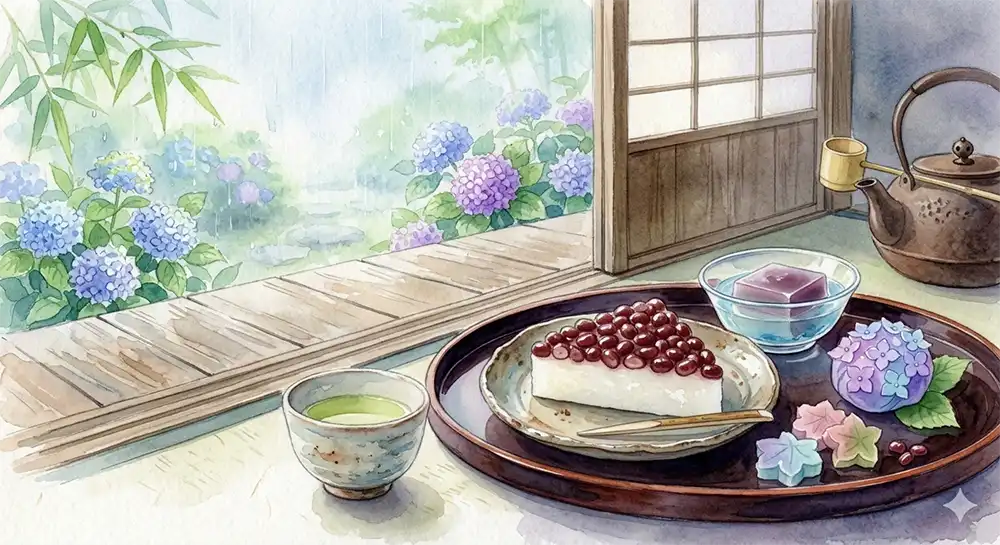
June 16th every year is Wagashi no Hi (Japanese Sweets Day). This anniversary, established by the All Japan Confectionery Association in 1979, originates from an event called ``Kajou'' during the Heian period. In 848 (Jowa 15), Emperor Ninmyo was affected by an epidemic, and on June 16th, he offered 16 sweets and mochi to the shrine to pray for warding off evil spirits. The name of the year was changed to ``Kasho,'' and the custom of eating sweets on June 16 to ward off bad luck became established in the imperial court.
🍡 嘉祥菓子――武士も町人も菓子を食べた日
Kasho events spread not only to the imperial court but also to the samurai society. During the Edo period, the Tokugawa shogunate held a ``Kajou Choudai'' ceremony in the Great Hall of Edo Castle on June 16th every year, during which the shogun distributed sweets to daimyo and hatamoto. There are records that more than 500 samurai received sweets.
This event ceased after the Meiji Restoration, but was revived by the confectionery industry in 1979 as "Japanese Sweets Day." Nowadays, long-established Japanese sweets shops sell limited edition products on this day, and special corners are set up in the underground food sections of department stores.
Japanese sweets are foods that give form to the seasons. The designs change monthly or semi-monthly, such as sakura mochi in spring, Mizu Youkan or Kuzukiri in summer, chestnut kinton in autumn, and camellia mochi in winter. In the world of tea ceremony, it is said that the selection of sweets served at a tea ceremony determines the dignity of the ceremony.
Points to enjoy Japanese sweets
- Japanese sweets for June:The representative Japanese sweets for June are "Minazuki". It is a confectionery with red beans on top of a triangular white scallop, and in Kyoto there is a custom of eating it on June 30th, the ``Summer Purification''. The triangle shape resembles ice, and the red beans have the meaning of warding off evil spirits.
- Purchase location:Around June 16th, long-established Japanese confectionery stores such as Toraya, Tsuruya Yoshinobu, and Taneya will be selling limited edition Kasho sweets. There will also be special features in the underground food section of department stores.
- Price range:One piece of fresh sweets costs about 400 yen to 600 yen. Custom-made items for tea ceremonies can cost over 1,000 yen each.
- Experience:Experience-based Japanese sweets making classes are held for tourists in Kyoto and Kanazawa. The experience of forming your own nerikiri (nerikiri) costs around 2,000 to 4,000 yen per session, and reservations are required.
🫖 菓子から見える日本の季節感
In the world of Japanese sweets, it is considered good to give form to a landscape that is a little ahead of the season. That's why July's morning glories are sometimes depicted on June's sweets. This aesthetic sense of "taking things in advance" is common not only to Japanese sweets but to all of Japanese food culture.
If you visit a Japanese confectionery shop on June 16th, you may find limited edition items related to Kasho. Depending on whether you walk by without knowing anything about it or look at the storefront knowing about the event that began 1178 years ago, the way you see the same Japanese sweets will change. Stopping at a Japanese sweets shop during your trip will be your gateway to experiencing Japanese history and the sense of the seasons.